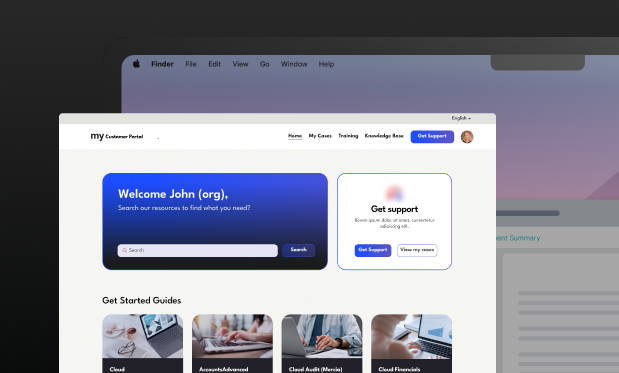
Wick helps teams source and create audience data, run quantitative and qualitative research, and structure the outputs so people and AI systems can reason from the same trusted intelligence. As both designer and developer, I visualised AI concepts into pages that explain how the platform works, motion that shows it in action, and an icon language that carried the story into investor decks.
Wick's foundation, a considered design system and Webflow build, came from Edgar Allan,an Atlanta studio. I was handed a very different design, but a strong, robust system to work within.
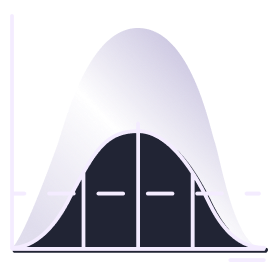
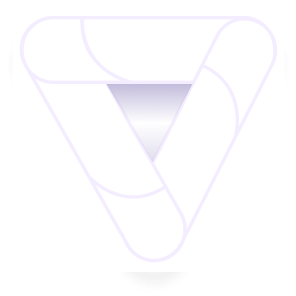
Wick needed a way to help people make sense of how the system worked. So I gave the abstract technology a visual vocabulary of ninety two icons to help demonstrate it. It meant thinking deeply, then conceptualising. I looked for the parallels between related ideas and grouped them into families, so the whole set read as one language.































You can't show an AI agent in a still. The owner wanted it all, the technical depth, the documents, the tables of results. But a hero has one job. Say what this is, fast.
So I built a Lottie that tumbles through real prompts. You feel the range before you type a word. An AI that reasons over marketing data, in this iteration election data, one of the first use cases. Built to flex, because the story never stopped changing.
Two full pages built inside the design system. The opening hook leads into a visual explanation of the product, kept clean and simple, with abstract graphics that touch every stage.
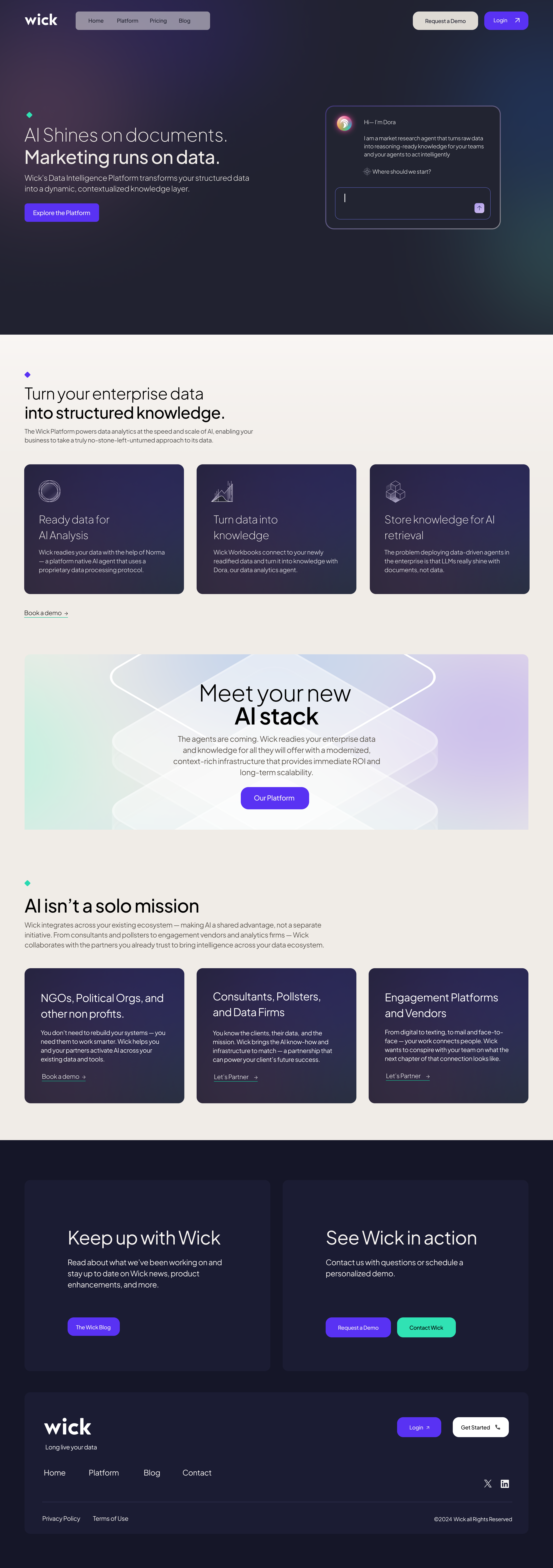
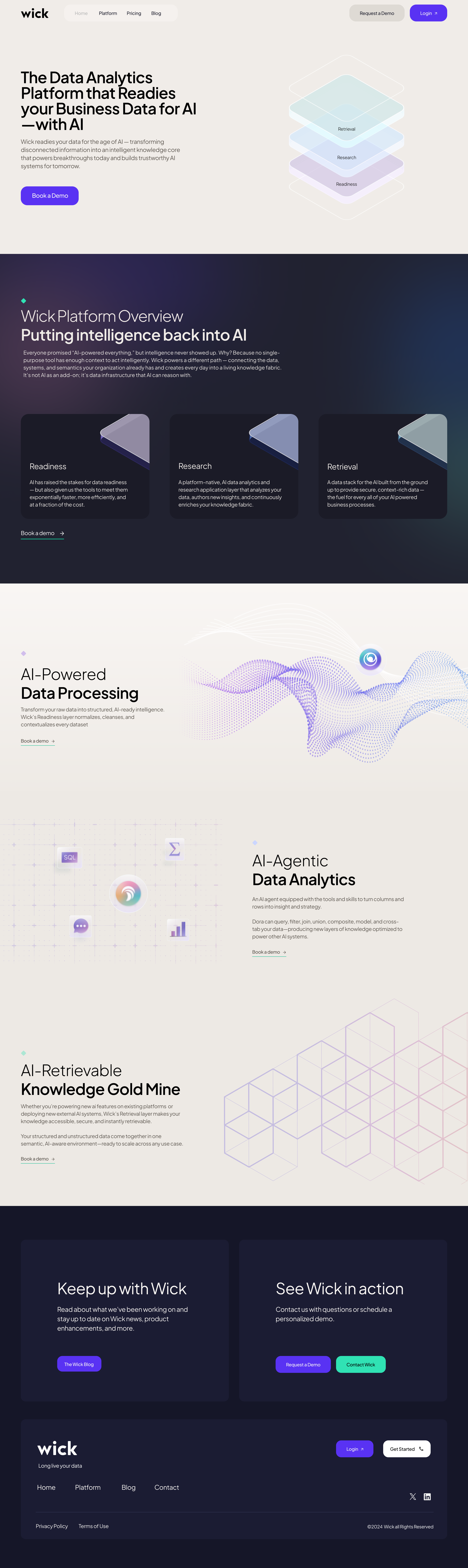
This was the fastest iteration cycle I've worked on. The client set the direction up front, but the focus shifted every couple of weeks, so each round came down to speed due to the short deadlines.
It was a good lesson in keeping the design simple and building sections, like the chat animations, that could absorb a change in direction without starting over.